What Is Mesothelioma?
Mesothelioma is a rare, aggressive cancer that forms in the mesothelium, a thin layer of tissue that lines and protects internal organs like the lungs and abdomen.
When asbestos fibers are inhaled or swallowed, they can become trapped in this tissue. Over time, those fibers cause inflammation, genetic damage, and cancerous cell growth.
Key Facts About Women and Mesothelioma
- Mesothelioma is always caused by asbestos exposure. It’s not linked to lifestyle choices, genetics, or personal behavior.
- Women now account for about 1 in 4 mesothelioma diagnoses in the U.S., meaning roughly 750 of the 3,000 Americans diagnosed each year are women.
- Many women were exposed without ever working in a high-risk job. Thousands of everyday products like talcum powder and cosmetics contaminated with asbestos can cause harm, as well as fibers carried home on a loved one’s clothing.
- Mesothelioma can remain hidden for 10 to 50 years, which is why many women are diagnosed later and struggle to connect their illness to asbestos exposure.
Delayed diagnosis is common and dangerous. Because mesothelioma is a rare cancer and not always suspected in women, valuable time can be lost before the disease is correctly diagnoseed.
Medical and legal support can make a real difference. Early treatment options and experienced legal guidance may help improve outcomes and hold companies accountable for preventable harm. Get started with a free case review.
How Women Are Exposed Without Knowing It
Mesothelioma is caused by asbestos. Asbestos was widely used for decades in construction, shipbuilding, manufacturing, and consumer products long before its dangers were fully disclosed to the public.
Women are often exposed in ways they never expect, including:
- Environmental Exposure: Living near asbestos mines, factories, shipyards, or older buildings where asbestos-containing materials were disturbed or deteriorated
- Military Exposure: Women veterans and mesothelioma linked to asbestos on military bases, ships, vehicles, and equipment
- Occupational Exposure: Working in or around industries that used asbestos or in jobs where asbestos was present but not disclosed, like schools, hospitals, offices, or industrial facilities
- Talc-Based Products: Talc is often found near asbestos in rock deposits, meaning that contamination can occur in products like baby powder, talcum powder, and cosmetics
- Secondhand Exposure: Breathing in asbestos fibers carried home on a loved one’s clothing, hair, skin, or work gear
Women with a husband or father who worked in an asbestos-related job are 10 times more likely to develop mesothelioma, according to the Centers for Disease Control and Prevention (CDC).
There is no safe level of asbestos exposure. Even brief or indirect contact can increase the risk of mesothelioma. However, because the disease often takes decades to appear, women may not remember exactly when, where, or how they were exposed.
Why Mesothelioma Affects Women Differently
Mesothelioma does not follow a one-size-fits-all path. For women, the disease often looks different from how exposure happens, to how symptoms appear, to how long it takes to get answers.
Many women are diagnosed later than men, not because their symptoms were less serious, but because mesothelioma is still widely viewed as a “man’s disease.” That assumption can delay testing, referrals, and treatment, even when warning signs are present.
Women are also more likely to have been exposed to asbestos outside of traditional high-risk jobs, which makes it harder to immediately connect their illness to asbestos.
Understanding these differences matters. It explains why so many women feel blindsided, why self-doubt is common after diagnosis, and why medical and legal advocacy is often necessary just to be heard.
“Many women with mesothelioma, especially peritoneal mesothelioma, are misdiagnosed or put off for quite a while. In fact, I’d say every woman that I’ve talked to, especially a young woman who has had peritoneal mesothelioma, was misdiagnosed.”
– Jessica, Peritoneal Mesothelioma Survivor
Types of Mesothelioma & Symptoms in Women
The mesothelioma symptoms women experience often depend on the part of the body where the cancer develops as well as its stage.
Pleural Mesothelioma (Lung Lining)
Malignant pleural mesothelioma affects the lining around the lungs called the pleura. While it is the most common type overall, women are often diagnosed later because early symptoms can resemble far more routine conditions.
Women with pleural mesothelioma may experience:
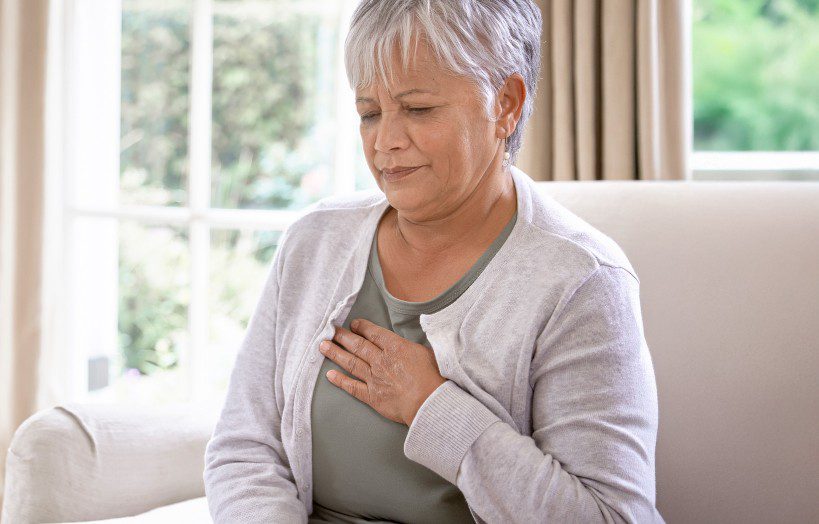
- Chest pain or tightness
- Chronic coughing
- Fatigue
- Shortness of breath
- Unexplained weight loss
These mesothelioma symptoms are frequently mistaken for asthma, allergies, respiratory infections, or anxiety, especially in women without a known history of asbestos exposure.
Peritoneal Mesothelioma (Abdominal Lining)
Peritoneal mesothelioma develops in the lining of the abdomen, or peritoneum, and is diagnosed more often in women than men. Its symptoms are primarily digestive, which makes it especially easy to misdiagnose.
Women with peritoneal mesothelioma may experience:
- Abdominal bloating or swelling
- Changes in digestion or appetite
- Feeling full quickly
- Nausea
- Persistent abdominal pain
These symptoms overlap with common gastrointestinal or gynecological conditions. Due to this, many women are treated for irritable bowel syndrome (IBS), ovarian issues, or infections before cancer is ever suspected.
Pericardial Mesothelioma (Heart Lining)
Pericardial mesothelioma is extremely rare and develops in the pericardium, the lining surrounding the heart. Because of its rarity, and because symptoms often resemble common heart or respiratory conditions, it’s especially difficult to diagnose.
Women with pericardial mesothelioma may experience:
- Chest pain or pressure
- Fatigue or weakness
- Irregular heartbeat or palpitations
- Shortness of breath, especially when lying down
These symptoms are often attributed to heart disease, anxiety, or fluid around the heart, which can delay an accurate diagnosis.
If this sounds familiar, you don’t have to navigate it alone. Our team is available to listen and help — for free.
Call (877) 446-3063 right now or chat with a case manager to get the support you deserve.
Diagnosis & Misdiagnosis in Women
For many women, a mesothelioma diagnosis does not come quickly or easily. Since the disease is rare and its symptoms often resemble far more common conditions, misdiagnosis is common, especially because many women don’t have a clear history of occupational asbestos exposure.
A mesothelioma diagnosis may include:
- Review of symptoms and medical history: Providers evaluate ongoing symptoms and may ask about past work, home environments, or family exposure that may have occurred decades earlier.
- Imaging tests: X-rays, CT scans, or MRIs may be used to look for fluid buildup, tumors, or abnormalities in the lungs, abdomen, or heart lining.
- Biopsy or fluid testing: A tissue sample or fluid removal is required to determine whether cancer cells are present.
- Pathology and specialist review: Because mesothelioma can resemble other cancers, samples are typically reviewed by pathologists or specialists familiar with asbestos-related diseases. Having a biopsy sample reviewed by a pathologist is the only way to know for sure if you have this cancer.
Many women report months, or even years, of appointments before mesothelioma is ever considered. During that time, symptoms may be treated individually rather than investigated together, delaying referrals to specialists and advanced testing.
Trusting your body matters. If something doesn’t feel right or symptoms persist despite treatment, you are not wrong to ask questions or seek another opinion.
“My advice to anyone who has been recently diagnosed is tap into a support system wherever you find it … and do whatever it takes to save your life. Go to any length, go to any hospital, find the best person to treat you that you can because your life is all you have and you have to fight for it.”
– Julie, Peritoneal Mesothelioma Survivor
Women and Mesothelioma: What the Numbers Show
For decades, mesothelioma was framed as a disease that primarily affected older men with heavy industrial exposure. The numbers below tell a more complete and more troubling story — one where many more women than suspected are impacted.
Find out about women and mesothelioma statistics:
- About 3,000 people in the U.S. are diagnosed with mesothelioma each year, and women account for roughly 25% of those cases.
- Rates among women have increased over time. Since the mid-1970s, mesothelioma incidence in women has risen, even as overall asbestos use declined.
- Women are more likely to be diagnosed at a younger age than historically expected, including in their 30s, 40s, and 50s.
- Peritoneal mesothelioma is diagnosed more often in women than men, according to the CDC.
- The agency reported that the annual number of mesothelioma deaths among women increased 25% in a 20-year period, with 12,227 deaths occurring during this timeframe.
- Among women who died from mesothelioma in 2020, 22.8% were homemakers, 15.7% worked in health care or social work, 5.6% were teachers, and 4.9% were registered nurses, as per the CDC.
These mesothelioma statistics reinforce an important truth: Women with mesothelioma are not rare exceptions. They are part of a growing and long-overlooked group.
Understanding the scope of the problem is a critical step toward better care, better outcomes, and accountability for preventable harm.
Treatment Options for Women With Mesothelioma
A mesothelioma diagnosis can feel overwhelming, but there are treatment options. Treatment plans are typically tailored based on the type of mesothelioma, how advanced it is, and a woman’s overall health and preferences.
Many women are surprised to learn that mesothelioma treatment approaches have evolved, and that seeing the right specialists can make a meaningful difference.
Women with mesothelioma may be offered one or more of the following treatments:
- Chemotherapy may be used to slow cancer growth, relieve symptoms, and extend survival. It may be given alone or combined with other treatments.
- Immunotherapy helps the immune system recognize and attack cancer cells. For some mesothelioma patients, it has become an important treatment option, either on its own or in combination with chemotherapy.
- Surgery may be used to remove tumors or reduce cancer burden. Whether surgery is appropriate depends on the type of mesothelioma, how far it has spread, and overall health.
- Targeted therapies deliver drugs directly to the affected area, sometimes in combination with surgery.
- Clinical trials give some women access to newer therapies that are not yet widely available. These may include innovative drug combinations, advances in immunotherapy, or targeted approaches based on tumor biology.
- Palliative care focuses on comfort, symptom relief, and quality of life. It can be provided at any stage of illness and alongside active mesothelioma treatment. It is not the same as end-of-life cancer care.
Mesothelioma treatment is personal. Some women pursue aggressive treatment. Others prioritize symptom management and quality of life. There is no “right” choice — only what feels best for you, based on your goals, values, and medical guidance.
Understanding your options is an important step toward regaining a sense of control after diagnosis. Women deserve answers and guidance. Start right now by getting a free case review.
Mesothelioma Prognosis
Mesothelioma survival varies widely, and no statistic can predict what will happen. Outcomes depend on the type of mesothelioma, how early it’s diagnosed, overall health, and access to quality care.
Research has consistently shown that women tend to live longer than men with mesothelioma, particularly pleural mesothelioma.
Women had about a 15% lower risk of death than men after accounting for age, health, tumor type, and treatment, according to the National Library of Medicine.
The same study found higher survival rates for women compared to men, with a 2-year survival rate of 21.7% and a 5-year rate of 5.7%.
Experts believe this difference may be linked to factors such as more favorable tumor characteristics, younger age at diagnosis, and possible biological differences that are still being studied.
Justice and Financial Support for Women With Mesothelioma
Women and families affected by mesothelioma may be eligible for meaningful financial support. Lawsuits, settlements, and asbestos trust fund claims can help cover medical bills, lost income, long-term care, and other expenses — while also holding companies accountable.
For many women, pursuing compensation is about more than money. It’s about acknowledgment, stability, and justice after years of unanswered questions.
Every case is different, but past results have included:
- $5.53 million for the wife of a shipyard foreman exposed to asbestos secondhand
- $3.8 million for the wife of a maintenance worker exposed through industrial talc
- $2.92 million for a woman exposed to asbestos through her husband’s job
- $2 million for a woman with mesothelioma who was unsure how she was exposed
- $4.21 million for a woman whose husband worked in Louisiana shipyards
What many women don’t realize is that most mesothelioma claims are resolved without going to trial, often through settlements or asbestos trust fund payments.
Many women start to get compensation within 90 days, with additional payments issued over time. You don’t need to know when or where exposure occurred to explore your legal options.
“We’ve managed to pay off most of the medical bills. We have enough money now to continue paying for my medical treatment without worrying about where I’m going to find the next loan. So that’s a peace of mind that I hadn’t known before.”
– Bonnie, Mesothelioma Survivor
Find a Top Mesothelioma Lawyer Near You
We work with a national network of experienced asbestos attorneys who specialize in helping women and families impacted by mesothelioma.
Wherever you live and however you were exposed, we’ll connect you with a legal team who knows how to fight and who truly listens.
The mesothelioma lawyers in our network have:
- Over 45 years of success with asbestos claims
- Helped thousands of families get results
- Attorneys who can help across all 50 states
- Won over $5 Billion in mesothelioma compensation
“My team works on a contingency basis, which means there aren’t any costs for families to work with us. We’ll pursue compensation and receive a portion of whatever we secure for clients. Our goal is to take on the legal side of things, so you can focus on your treatment.”
– Melissa Schopfer, Mesothelioma Attorney
Get a free case review now. Let’s talk about what happened and what you can do next.
FAQs About Mesothelioma Cancer
Can women get mesothelioma?
Yes. Women can and do get mesothelioma. While the disease was once associated mainly with men in industrial jobs, women now account for about 1 in 4 mesothelioma diagnoses in the United States.
What is the main cause of mesothelioma?
The only known cause of mesothelioma is asbestos exposure, typically through workplace exposure. However, many women were exposed without ever working in a traditionally high-risk job.
Common exposure pathways for women include:
- Environmental exposure from older homes, schools, or hospitals
- Household or consumer products that historically contained asbestos like talcum powder
- Secondhand exposure, such as asbestos fibers brought home on a spouse’s or parent’s work clothes
- Military-related exposure, including women veterans living or working on bases or ships
Asbestos fibers can lodge in the lining of the lungs, abdomen, or heart, causing chronic irritation. Over 10-50 years, that damage can develop into mesothelioma.
If you or a loved one has been harmed, we’re here to help. Get a free case review to learn about your legal options.
What are 5 signs and symptoms of mesothelioma?
Mesothelioma symptoms can vary by type and are often subtle at first, especially in women.
Five common signs of mesothelioma include:
- Abdominal bloating or swelling
- Chest pain or tightness
- Fatigue
- Shortness of breath
- Unexplained weight loss
Because these symptoms overlap with many common conditions, women are often diagnosed later than men. If symptoms persist, worsen, or don’t respond to treatment, it’s important to ask questions and seek further evaluation.
Is mesothelioma cancer curable?
At this time, mesothelioma is not considered curable, but it is treatable. Many women are living longer and with better quality of life thanks to advances in treatment, earlier diagnosis, and care from experienced specialists.
Outcomes depend on several factors, including the type of mesothelioma, how early it’s diagnosed, overall health, and access to specialized care. Some women respond especially well to treatment, and research has shown that women, on average, may have better survival outcomes than men.
Call (877) 446-3063 right now to see if you may be eligible for compensation to help cover treatment costs.

Written by: Her Case Matters
At HerCaseMatters, we believe women deserve to be heard — especially when it comes to their health and safety. Too often, harmful drugs, devices, and corporate wrongdoing impact women’s lives without proper warning, support, or accountability. We’re here to change that. We work with trusted legal partners who are deeply experienced in holding powerful companies accountable. But more than that, we’re here to remind women everywhere that their pain is real, their experiences matter, and they deserve justice.
- Centers for Disease Control and Prevention. “Malignant Mesothelioma Mortality in Women — United States, 1999–2020.” Retrieved from: https://www.cdc.gov/mmwr/volumes/71/wr/mm7119a1.htm.
- National Libary of Medicine. Gender differences in outcomes of patients with mesothelioma. Retrieved from: https://pmc.ncbi.nlm.nih.gov/articles/PMC7584743/.
- Sokolove Law. Mesothelioma. Retrieved from: https://www.sokolovelaw.com/mesothelioma/.
- Simmons Hanly Conroy. Mesothelioma Law Firm. Retrieved from: https://www.simmonsfirm.com/mesothelioma/.