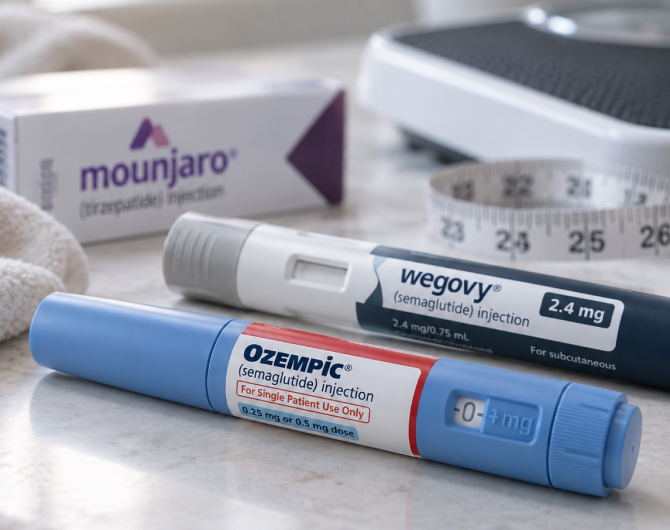
Why Are People Filing Weight Loss Drug Lawsuits?
People are filing weight loss drug lawsuits after developing serious health problems while using GLP-1 medications prescribed for diabetes or weight management. They claim that drug manufacturers failed to adequately warn patients and doctors about potential complications.
GLP-1 lawsuits center on side effects like:
- Gallbladder disease
- Gastroparesis
- Ileus (intestinal paralysis) and bowel obstruction
- Non-arteritic anterior ischemic optic neuropathy (NAION)
- Pancreatitis
- Wernicke’s encephalopathy (a neurological condition)
A weight loss drug lawyer may be able to help if you’ve experienced any of these side effects. They can collect evidence, negotiate a settlement, or pursue compensation through a court verdict if necessary.
Talk with us now to find out if you’re eligible for a weight loss drug lawsuit.
Gallbladder Disease
Gallbladder disease includes gallstones and cholecystitis (gallbladder inflammation), which can require emergency treatment or surgery. Research in JAMA Internal Medicine linked GLP-1 use to increased gallbladder disease risk.
A separate JAMA Internal Medicine study reported on cases of acute cholecystitis in patients using GLP-1 drugs, which were noted by the U.S. Food and Drug Administration (FDA). The medications’ labeling didn’t have a gallbladder disease warning at the time, which is the foundation for some GLP-1 lawsuits.
Gastroparesis
Gastroparesis is a disorder that slows or stops the stomach from emptying food into the small intestine. It can cause nausea, vomiting, and bloating.
GLP-1 medications work in part by delaying stomach emptying. FDA-approved labeling warns that some of these drugs are not recommended for patients with a history of severe gastroparesis.
However, if you didn’t understand this risk before taking a weight loss medication and developed this condition, you might be eligible for a gastroparesis lawsuit.
Bowel Obstruction
Bowel obstruction occurs when the intestines stop moving contents normally because there’s a physical block. People who develop this condition may experience pain and bloating that can require surgery.
JAMA researchers found that people using GLP-1 medications for weight loss had a significantly higher risk of bowel obstructions than those using another weight-loss prescription.
Some people are filing weight loss drug lawsuits because they weren’t warned about this complication.
Non-Arteritic Anterior Ischemic Optic Neuropathy (NAION)
Non-arteritic anterior ischemic optic neuropathy (NAION) disrupts blood flow to the eye, damaging the optic nerve. It typically causes sudden, painless symptoms.
Signs of NAION may include:
- Areas missing from field of vision
- Blurred or cloudy vision
- Changes in color perception
- Dim or darkened vision
- Reduced visual sharpness
- Sudden vision loss in one eye
People taking a GLP-1 medication have a significantly higher risk of developing NAION than people losing weight without them. This condition can also occur from other causes like diabetes.
Those who have lost their vision as a result of taking GLP-1 drugs without knowing this risk are filing lawsuits as manufacturers failed to warn the public and health care providers. This link is noted in more than one weight loss injections lawsuit.
Pancreatitis
Pancreatitis occurs when digestive enzymes inflame and damage the pancreas, resulting in severe abdominal pain that can require hospitalization. Lifestyle habits like drinking and smoking can cause this condition, but it’s also been named in weight loss drug lawsuits.
GLP-1 medications can more than double a person’s odds of hospitalization for acute pancreatitis. People should know about that risk before starting weight loss drugs, which is a focus of many GLP-1 lawsuits.
Wernicke’s Encephalopathy
Wernicke’s encephalopathy is a brain disorder triggered by a severe vitamin B1 deficiency, leading to confusion, impaired coordination, and eye movement problems. It may also progress to Korsakoff syndrome, which limits a person’s ability to form new memories.
GLP-1 drugs slow the digestive system, which can make people eat fewer meals and snacks. Restricted food intake may decrease a person’s vitamin B1 levels, leading to Wernicke’s encephalopathy.
If you weren’t aware of these risks and developed one or more of these conditions, you may qualify to work with a GLP-1 lawsuit lawyer. Contact us now for a free consultation about your eligibility.
Medications Named in Weight Loss Drug Lawsuits
Several weight loss medications have been named in medical product liability claims like GLP-1 gastroparesis lawsuits. Although these medications are often called “weight loss drugs,” not all are approved specifically for weight management.
Drugs named in GLP-1 lawsuits include:
- Byetta®
- Ozempic
- Wegovy
- Saxenda®
- Trulicity®
- Mounjaro®
- Rybelsus®
- Zepbound®
As more people report serious health complications, the number of weight loss drug lawsuits is expected to keep growing. Call us at (877) 640-6101 if you’ve experienced unexpected medical complications related to these GLP-1 drugs or others and want to seek compensation.
Byetta
Byetta (exenatide) is a GLP-1 medication that helps adults with type 2 diabetes manage blood sugar. Some people taking this drug have developed acute pancreatitis and gallbladder disease.
They may have started their prescriptions before the label was updated with warnings about those potential side effects. Some Byetta weight loss drug lawsuits also claim that the conditions are a result of a defectively designed medication.
Ozempic
Millions of Americans have taken semaglutide, sold as Ozempic, since its 2017 FDA approval for managing blood sugar in adults with type 2 diabetes. Alongside that widespread use, reports of gallbladder disease, pancreatitis, and gastroparesis have surfaced.
The company updated its label with side effect warnings in 2023, but Ozempic gastroparesis lawsuits are proceeding. Multidistrict litigation (MDL) cases are also moving forward in federal courts. They name Ozempic, Wegovy, Rybelsus, Trulicity, and Mounjaro as medications causing bowel blockages and vision loss.
Wegovy
This is a GLP-1 medication that quickly became an effective weight loss drug, but it also had side effects that some patients weren’t aware of. The first Wegovy lawsuit traces back to 2021, when people could start getting prescriptions for the FDA-approved injection or pill.
Court filings in Wegovy lawsuits commonly point to gallbladder disease and intestinal blockages, both risks the drug’s own postmarketing safety data later confirmed. Some people who file a Wegovy lawsuit allege that these complications should have been disclosed sooner so they could have known their full risks before starting the drug.
Saxenda
Saxenda (liraglutide) was the first once-daily GLP-1 drug cleared specifically for chronic weight management in adults with obesity or a weight-related health condition. Though it’s effective for many people, those who file a lawsuit against the weight loss drug company may cite several side effects.
Saxenda lawsuits allege that the drug can cause gallstones and pancreatitis, which people were not aware of when they started their prescriptions. Inadequate safety warnings can lead to weight loss drug lawsuit compensation that helps people afford essential medical care.
Trulicity
Trulicity contains dulaglutide and is used to treat type 2 diabetes. Although it isn’t approved as a weight loss medication, it belongs to the GLP-1 drug class and can cause similar side effects.
People filing Trulicity lawsuits have experienced NAION, pancreatitis, and gastroparesis. The company cautioned that Trulicity hadn’t been studied in patients with a history of severe gastrointestinal disease when it first hit the market.
However, Eli Lilly Trulicity lawsuits claim the company still failed to adequately warn the public about potential health risks.
Mounjaro
Mounjaro (tirzepatide) is a glucose-dependent insulinotropic polypeptide (GIP) and GLP-1 receptor agonist that helps people treat type 2 diabetes. CBS News reported the first Mounjaro lawsuit was filed in 2023, alleging the drug caused gastroparesis in a patient hospitalized repeatedly after severe vomiting.
Since then, Mounjaro lawsuits have expanded to include claims involving:
- Gallbladder disease
- Ileus and bowel obstruction
- Pancreatitis
- NAION
- Wernicke’s encephalopathy
TIME reported that Mounjaro’s own label acknowledges severe gastrointestinal risks without explicitly naming gastroparesis or other side effects. The company may have failed to adequately warn the public about related health dangers, which opens the door to GLP-1 lawsuits.
Rybelsus
Rybelsus contains semaglutide and is taken by mouth rather than injection. It’s helpful for people with type 2 diabetes or weight loss goals, but can also have unexpected side effects.
The Central Oregon Daily noted that thousands of Rybelsus lawsuits now accuse the manufacturer of failing to warn patients about the risks of blindness, bowel injuries, and neurological damage.
Zepbound
Eli Lilly’s Zepbound (tirzepatide) became available to patients in December 2023. It activates both the GIP and GLP-1 hormone receptors, giving people another medication-assisted way to lose weight.
However, thousands of Zepbound lawsuits accuse manufacturer Eli Lilly of failing to warn patients about risks including gastrointestinal injuries and vision loss.
If you’ve experienced similar adverse effects, you may be eligible to file a Zepbound lawsuit and seek compensation with one of our partner lawyers.
Get your free case review now to discuss filing a weight loss drug lawsuit.
What Compensation Could Be Available in a Weight Loss Drug Lawsuit?
Weight loss drug lawsuit compensation depends on the severity of the injury and isn’t guaranteed. However, the Ozempic lawsuits totaling $2 billion show how much eligible people could potentially recover from weight loss drug manufacturers.
GLP-1 lawsuit settlements or compensation could help you pay for:
- Costs associated with vision care or accommodations
- Emotional distress
- Loss of enjoyment of life
- Lost wages or reduced earning capacity
- Pain and suffering
- Past and future medical expenses
- Other injury-related expenses
Cases that don’t reach Ozempic lawsuit settlements may proceed to trial and result in compensation through a court verdict. It depends on whether both parties can reach a fair settlement or if your weight loss drug lawyer recommends going to court.
Weight Loss Drug Lawsuit News and Updates
The GLP-1 lawsuit landscape continues to shift as more people come forward with medical product liability claims. Below is the latest GLP-1 lawsuit news, updated as new developments emerge in the federal MDL and the broader weight loss drug lawsuit landscape.
Here are the most recent GLP-1 lawsuit updates:
- September 2026: A federal judge began a 5-day hearing for MDL 3094 on September 14. The goal was to weigh scientific and legal issues common across 4,022 remaining weight loss drug lawsuit claims.
- January 2026: Novo Nordisk’s attorney told a federal court that 75% of GLP-1 lawsuits in the MDL include a gastroparesis allegation. Among those, 18% involved bowel obstructions and 8% cited gallbladder injuries.
- December 2025: The Judicial Panel on Multidistrict Litigation approved a separate MDL specifically for vision-loss claims tied to GLP-1 drugs, splitting NAION cases from the broader gastrointestinal-injury litigation.
- July 2024: A Harvard study found Ozempic and Wegovy users may be more than 4 times as likely to develop NAION compared to patients on other medications, according to Fortune.
- February 2024: The Judicial Panel on Multidistrict Litigation centralized 37 initial weight loss drug lawsuits into the Eastern District of Pennsylvania, creating MDL No. 3094 for GLP-1 gastrointestinal injury claims.
Developments with GLP-1 lawsuits will continue as the MDLs progress. Their developments could guide how future settlement talks and bellwether trials unfold.
Who Might Qualify for a Weight Loss Drug Lawsuit?
Women diagnosed with NAION or other adverse side effects after taking a GLP-1 medication may be able to pursue Ozempic lawsuit compensation through a settlement or trial verdict, depending on the circumstances.
Qualifying factors may include:
- The applicable statute of limitations
- The severity and permanence of your injury
- When and how long you took the medication
- When your side effects began
- Which condition you were diagnosed with
- Which GLP-1 medication you used
- Your medical and prescription records
- Other health conditions or risk factors
Taking a GLP-1 medication and later developing side effects doesn’t automatically establish a legal claim. Our team can discuss your medical history to determine whether you may qualify to work with a gastroparesis lawyer.
How Can a Weight Loss Drug Lawyer Help?
If you’re dealing with unexpected complications after taking a GLP-1 medication, you don’t have to figure out your next step alone. The weight loss drug attorneys in our network can review your medical evidence and fight for compensation on your behalf.
A GLP-1 lawyer can:
- Review your medical and prescription history
- Gather medical records and other evidence
- Investigate the circumstances surrounding your injury
- Determine whether your injury may meet current case criteria
- Explain the federal litigation and how it may affect your claim
- File your claim within set deadlines
- Determine what compensation may be available
- Handle legal communications throughout your case
Our team can put you in touch with experienced weight loss attorneys if you’re eligible. We’ll give you more information about what happened, your next options, and what moving forward with a weight loss drug lawyer could look like for you.
How to File a Weight Loss Drug Lawsuit
You don’t have to understand MDLs or gather every piece of evidence before speaking with us about filing a lawsuit against weight loss drugs.
Here’s how you can file a weight loss drug lawsuit:
- Get a free case review: Talk with our team about your legal options without any upfront fees or commitments.
- Collect evidence: Your GLP-1 attorney can obtain medical records and other evidence to determine which weight loss drug companies or other parties may be responsible for your complications.
- File your weight loss drug lawsuit: Your weight loss drug lawyer will file your claim in the proper court before applicable filing deadlines pass.
- Pursue compensation: Take care of your health while your attorney negotiates a weight loss drug lawsuit settlement or, if necessary, fights for you in court.
Our partner weight loss drug attorneys can handle the entire legal process, letting you focus on your health and recovery. If you want to ask questions and get support, we’re here to help.
Reach out today to speak with our compassionate team.
Get Support Filing a Weight Loss Drug Lawsuit
You may have started a GLP-1 medication hoping to lose weight or improve your health. Unexpected, serious side effects may have left you with questions you never could have anticipated.
You deserve clear information about what happened and whether you have legal options. Her Case Matters can connect you with experienced attorneys ready to file a GLP-1 lawsuit and manage the legal process for you.
Get a free case review or call (877) 640-6101 to see if you qualify. There’s no pressure to move forward with a weight loss drug lawsuit simply because you want clarity.
Weight Loss Drug Lawsuit FAQs
Is there a lawsuit against GLP-1 medications?
Yes, there are many lawsuits against GLP-1 drugs. These weight loss drug lawsuits allege that GLP-1 medications caused side effects that patients and doctors weren’t adequately warned about or that the products weren’t made properly.
Two examples of multidistrict litigation, MDL 3094 and 3163, are litigating thousands of collective GLP-1 claims in federal courts as of September 2026.
These MDLs are similar, yet not exactly the same, as a class action lawsuit about weight loss drugs. There are no class actions for GLP-1s as of 2026, and MDLs or individual lawsuits may give you a better chance of getting a fair amount of compensation based on your specific injuries.
Contact us today to discuss weight loss drug lawsuits and figure out your next steps.
What are the potential side effects of taking Ozempic for 3 months?
Taking Ozempic for 3 months may result in weight loss and better blood sugar management, but some people also experience unexpected side effects.
Ozempic and other weight loss drugs are drawing thousands of lawsuits by causing long-term complications like gastroparesis, vision loss due to non-arteritic anterior ischemic optic neuropathy (NAION), and gallbladder stones.
If you’re concerned about experiencing adverse effects of GLP-1 drugs, talk with your doctor. They can recommend the best weight loss or blood sugar management prescriptions based on your health history and likelihood of developing complications.
Why are older people quitting GLP-1?
Older people are quitting GLP-1 medications for several reasons. Their Medicare plans may remove coverage or they might have uncomfortable symptoms like nausea. Some also stop taking weight loss drugs due to medication shortages.
While some side effects of GLP-1 drugs are well-known, like stomach cramps, many people did not know about other serious risks like NAION when taking weight loss prescriptions. When that happens, victims may qualify for GLP-1 lawsuits.
Are there weight loss drug lawsuit settlements?
The federal GLP-1 MDLs haven’t reached any settlements as of September 2026. However, people have estimated that Ozempic lawsuit settlement amounts could total $2 billion if successful.
Future settlements will depend on the litigation, evidence provided, and the circumstances of individual claims. However, you don’t need to wait for GLP-1 settlement news to move forward with your own weight loss drug lawsuit.
How long do I have to file a weight loss drug lawsuit?
The statute of limitations or filing deadline for a weight loss drug lawsuit depends on multiple factors. Your claim depends on your state’s laws, when you developed your complications, and when you discovered the potential connection to the medication.
Because missing the deadline can prevent you from filing a claim, consider speaking with an attorney as soon as possible if you believe you were harmed.
Get a free case review now to learn about your eligibility.

Written by: Her Case Matters
At HerCaseMatters, we believe women deserve to be heard — especially when it comes to their health and safety. Too often, harmful drugs, devices, and corporate wrongdoing impact women’s lives without proper warning, support, or accountability. We’re here to change that. We work with trusted legal partners who are deeply experienced in holding powerful companies accountable. But more than that, we’re here to remind women everywhere that their pain is real, their experiences matter, and they deserve justice.
- American Academy of Ophthalmology. (August 1, 2022). NAION: Diagnosis and management. Retrieved from: https://www.aao.org/eyenet/article/naion-diagnosis-and-management.
- American Academy of Ophthalmology. (October 1, 2025). Semaglutide use and the risk of NAION: Current thinking. Retrieved from: https://www.aao.org/eyenet/article/semaglutide-weight-loss-drugs-vision-loss-naion.
- CBS News. (August 3, 2023). Ozempic, Mounjaro manufacturers sued over claims of “stomach paralysis” side effects. Retrieved from: https://www.cbsnews.com/news/ozempic-mounjaro-lawsuit-gastroparesis-stomach-paralysis-side-effect/.
- Central Oregon Daily News. (February 9, 2026). ‘My colon blew up’: lawsuits mount over GLP-1 weight-loss drugs. Retrieved from: https://www.centraloregondaily.com/news/consumer/glp-1-weight-loss-drug-lawsuits-injury-claims/article_51a44d3d-4161-4dd9-a2f4-f63dbb602eb0.html.
- Cleveland Clinic. (April 2, 2022). Wernicke-Korsakoff syndrome. Retrieved from: https://my.clevelandclinic.org/health/diseases/22687-wernicke-korsakoff-syndrome.
- Fierce Pharma. (n.d.). FDA Approves Trulicity™ (dulaglutide), Lilly’s once-weekly therapy for adults with type 2 diabetes. Retrieved from: https://www.fiercepharma.com/pharma/fda-approves-trulicity%E2%84%A2-dulaglutide-lilly-s-once-weekly-therapy-for-adults-type-2-diabetes-0.
- Fortune Journals. (January 10, 2025). Archives of internal medicine research. Retrieved from: https://www.fortunejournals.com/articles/semaglutide-doubleedged-sword-with-risks-and-benefits.html.
- Fortune. (July 3, 2024). Ozempic linked to rare cases of vision loss in Harvard study. Retrieved from: https://fortune.com/well/2024/07/03/ozempic-linked-to-rare-cases-of-vision-loss/.
- GovInfo. (n.d.). 1:23-F-03094 – IN RE: Glucagon-like peptide-1 receptor agonists (GLP-1 RAs) products liability litigation. Retrieved from: https://www.govinfo.gov/app/details/USCOURTS-jpml-1_23-F-03094/USCOURTS-jpml-1_23-F-03094-0.
- Hathaway, J. T., Shah, M. P., Hathaway, D. B., et al. (July 3, 2024). Risk of nonarteritic anterior ischemic optic neuropathy in patients prescribed semaglutide. Retrieved from: https://jamanetwork.com/journals/jamaophthalmology/fullarticle/2820255.
- He, L., Wang, J., Ping, F., et al. (March 28, 2022). Association of glucagon-like peptide-1 receptor agonist use with risk of gallbladder and biliary diseases. Retrieved from: https://jamanetwork.com/journals/jamainternalmedicine/fullarticle/2790392.
- KFF Health News. (January 6, 2026). Older Americans quit weight loss drugs in droves. Retrieved from: https://kffhealthnews.org/aging/glp1-older-americans-quitting-weight-loss-drugs/.
- Managed Healthcare Executive. (n.d.). FDA grants approval to Novo Nordisk chronic weight management drug. Retrieved from: https://www.managedhealthcareexecutive.com/view/fda-grants-approval-novo-nordisk-chronic-weight-management-drug.
- Mayo Clinic. (October 31, 2025). Pancreatitis. Retrieved from: https://www.mayoclinic.org/diseases-conditions/pancreatitis/symptoms-causes/syc-20360227.
- Medical News Today. (July 17, 2026). Byetta (exenatide). Retrieved from: https://www.medicalnewstoday.com/articles/drugs-byetta.
- MedlinePlus. (April 27, 2026). Intestinal obstruction and Ileus. Retrieved from: https://medlineplus.gov/ency/article/000260.htm.
- Michigan Medicine. (May 22, 2024). Young people are increasingly using Wegovy and Ozempic. Retrieved from: https://www.michiganmedicine.org/health-lab/young-people-are-increasingly-using-wegovy-and-ozempic.
- National Institute of Diabetes and Digestive and Kidney Diseases. (n.d.). Definition & Facts for Gastroparesis. Retrieved from: https://www.niddk.nih.gov/health-information/digestive-diseases/gastroparesis/definition-facts.
- National Institute of Diabetes and Digestive and Kidney Diseases. (n.d.). Eating, diet, & nutrition for gallstones. Retrieved from: https://www.niddk.nih.gov/health-information/digestive-diseases/gallstones/eating-diet-nutrition.
- Osei, S. P., Akomaning, E., Florut, T. F., et al. (December 16, 2024). Gastrointestinal safety assessment of GLP-1 receptor agonists in the US: A real-world adverse events analysis from the FAERS database. Retrieved from: https://www.mdpi.com/2075-4418/14/24/2829.
- Pharmaceutical Executive. (November 8, 2023). FDA approves zepbound for chronic weight management. Retrieved from: https://www.pharmexec.com/view/fda-approves-zepbound-for-chronic-weight-management.
- Reuters. (n.d.). FDA approves Novo Nordisk diabetes drug Ozempic. Retrieved from: https://www.reuters.com/article/business/healthcare-pharmaceuticals/fda-approves-novo-nordisk-diabetes-drug-ozempic-idUSKBN1DZ2O8/.
- Sheth, K., Garza, E., Saju, A., et al. (June 6, 2024). Wernicke encephalopathy associated with semaglutide use. Retrieved from: https://www.cureus.com/articles/255917-wernicke-encephalopathy-associated-with-semaglutide-use#!/.
- Singh, S., Chang, H.-Y., Richards, T. M., et al. (n.d.). Glucagonlike peptide 1–based therapies and risk of hospitalization for acute pancreatitis in type 2 diabetes mellitus. Retrieved from: https://jamanetwork.com/journals/jamainternalmedicine/fullarticle/1656537.
- Sodhi, M., Rezaeianzadeh, R., Kezouh, A., & Etminan, M. (October 5, 2023). Risk of gastrointestinal adverse events associated with glucagon-like peptide-1 receptor agonists for weight loss. Retrieved from: https://jamanetwork.com/journals/jama/fullarticle/2810542.
- Sokolove Law. (September 10, 2026). Ozempic® lawsuit. Retrieved from: https://www.sokolovelaw.com/dangerous-drugs/ozempic/.
- Time. (November 4, 2024). Patients are suing over alleged side effects of weight-loss drugs. Retrieved from: https://time.com/7130456/ozempic-side-effects-wegovy-mounjaro-gastroparesis-weight-loss/.
- U.S. Food and Drug Administration. (February 2026). Highlights of prescribing information: Wegovy. Retrieved from: https://www.accessdata.fda.gov/drugsatfda_docs/label/2026/215256s033lbl.pdf.
- U.S. Judicial Panel on Multidistrict Litigation. (September 1, 2026). MDL statistics report – Distribution of pending MDL dockets by actions pending. Retrieved from: https://www.jpml.uscourts.gov/sites/jpml/files/Pending_MDL_Dockets_By_Actions_Pending-September-1-2026.pdf.
- USA Today. (September 21, 2026). Are GLP-1s causing blindness? What we know about rare cases. Retrieved from: https://www.usatoday.com/story/news/health/2026/09/21/glp-1-blindness-lawsuits-rare-cases/91877381007/.
- Xtalks. (December 19, 2025). Ozempic lawsuits continue with second US mass litigation involving GLP-1 drugs and vision loss. Retrieved from: https://xtalks.com/ozempic-lawsuits-continue-with-second-us-mass-litigation-involving-glp-1-drugs-and-vision-loss-4561/.