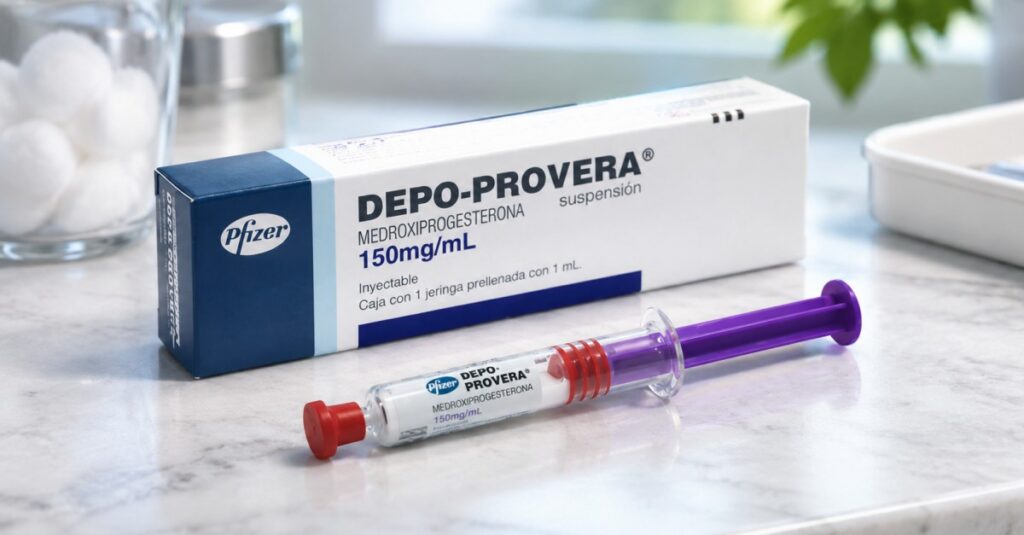
Most women shouldn’t be on Depo-Provera® for more than 2 years unless other birth control methods aren’t a good fit, according to the U.S. Food and Drug Administration (FDA). There’s no hard cutoff, but long-term use can weaken bones and has been linked to meningioma, a usually slow-growing tumor that forms in the membranes surrounding the brain and spinal cord.
In December 2025, the FDA approved a label update that added a meningioma warning to Depo-Provera CI and Depo-SubQ Provera 104®. The change followed years of research, including a French study in The BMJ that found women who used the shot for at least 1 year had a 5.6 times higher risk of a meningioma that required surgery.
If you used the Depo shot and were later diagnosed with a meningioma, you may be eligible for financial compensation. Get a free case review now to learn whether you qualify.
The Depo Injection: How Long Does It Take to Work?
The Depo-Provera shot does not always start preventing pregnancy immediately. How quickly it becomes effective depends on when you receive your first injection during your menstrual cycle:
- If you get the shot within the first 5 days of your period, it provides pregnancy protection right away.
- If you receive it at another point in your cycle, you generally need to use a backup birth control method, such as condoms, for the next 7 days.
Although Depo-Provera is highly effective at preventing pregnancy when used as directed, it can cause side effects, including irregular bleeding, headaches, weight changes, and bone mineral density loss.
Understanding how the injection works, how long it remains effective, and its potential health risks can help you make informed decisions about using it.
Depo Shot: How Long Does It Take to Wear Off?
The Depo-Provera shot typically provides pregnancy protection for about 13 weeks after an injection. However, the medication does not leave the body as soon as its contraceptive effects begin to wear off.
Medroxyprogesterone acetate is released slowly into the body and can remain detectable for several months after the last injection. As a result, hormonal effects and side effects may continue after the 3-month pregnancy-prevention window has passed.
It can take 6 to 12 months or longer for the body to return to its normal menstrual cycle and ovulation patterns after the last shot. The time varies between women, and some may experience lingering irregular bleeding, headaches, mood changes, or other symptoms.
How Long Can You Be on Depo-Provera?
The FDA recommends against using Depo-Provera for longer than 2 years unless other birth control methods are considered inadequate. This recommendation is largely based on concerns about meningioma brain and spinal cord tumors and bone mineral density loss.
Depo-Provera suppresses estrogen, which helps maintain bone strength. Studies have found that women can lose bone mineral density from Depo shot use, and some loss may not fully reverse after stopping.
The longer Depo-Provera is used, the greater the risks of different issues:
- 1 year or longer: A March 2024 study published in The BMJ found that women who used injectable medroxyprogesterone acetate for at least 1 year had 5.6 times greater risk of a meningioma tumor that requires surgery.
- 2 years: The FDA advises against using Depo-Provera for longer than 2 years because of concerns about potentially significant bone mineral density loss.
- 5 years: Clinical research found that women using Depo-Provera experienced an average 5% to 6% decrease in bone mineral density at the hip and spine after 5 years of use.
These findings highlight why the duration of Depo-Provera use matters. Women considering continued use should discuss the potential risks with their health care providers and whether alternative birth control methods may be appropriate.
“Treatment for meningioma is not cheap. We’re talking imaging, surgery in some cases, follow-up care, and potentially being unable to work for a period of time. A lawsuit, if successful, can help compensate for those kinds of losses.”
– Ricky LeBlanc, Managing Attorney of Sokolove Law
Meningioma Symptoms Linked to Long-Term Depo-Provera Use
The longer you’ve been on Depo-Provera, the more important it is to recognize the signs of a meningioma. These tumors are the most common type of primary brain tumor, and their symptoms depend on where they grow.
Possible Depo-Provera meningioma symptoms include:
- Confusion
- Headaches that are worse in the morning
- Loss of hearing or smell
- Seizures
- Tingling, numbness, or pain on one side of the face
- Vision changes
- Weakness in the legs or arms, or one side of the body
These symptoms can easily be mistaken for stress, migraines, or other everyday health issues. If you used the Depo shot and notice new or worsening problems, ask your doctor whether imaging like an MRI is right for you.
How Long Does the Depo Shot Last or Stay in Your System?
Each Depo-Provera injection is designed to prevent pregnancy for approximately 13 weeks (3 months). For continuous protection, you need to maintain a consistent schedule. Waiting too long between shots can increase your risk of pregnancy, so it’s generally recommended to get injections every 12 to 13 weeks.
However, the medication can remain in your body well beyond that period. Its active ingredient medroxyprogesterone acetate gradually enters the bloodstream, so it can take several months for the body to eliminate the drug after the last injection.
Because Depo-Provera can remain in the body for an extended period, stopping injections does not necessarily mean its effects end immediately. Even after you stop using Depo shots, your heightened risk of developing a meningioma remains.
Symptoms can be hard to notice at first as these tumors slowly grow and gradually press on different parts of your brain. “I worried about my memory so much that I went and got an MRI. And I found out I have a brain tumor,” said famous singer Sheryl Crow, explaining her first meningioma symptoms.
How Long Do Depo Withdrawal Symptoms Last?
Depo-Provera withdrawal symptoms can last for several weeks to several months after a woman stops receiving injections. Because medroxyprogesterone acetate can remain in the body for months, hormonal changes may continue well after the last shot.
As the body adjusts, some women experience irregular periods, headaches, mood changes, fatigue, breast tenderness, and changes in appetite or weight. The duration and severity of withdrawal symptoms vary.
For some women, menstrual cycles and ovulation return within a few months, while others may not resume regular periods for 6 to 12 months or longer. Fertility can also take time to return, although pregnancy is possible before the first period after stopping Depo-Provera.
Women experiencing persistent, severe, or unusual symptoms after discontinuing Depo-Provera should consult a health care provider. Symptoms that continue or worsen may warrant further evaluation rather than being automatically attributed to hormonal withdrawal.
Get Support After a Depo-Provera Brain Tumor Diagnosis
If you developed meningioma after using Depo-Provera, you may have legal options. Research has linked prolonged use of the birth control shot to an increased risk of meningioma, and women diagnosed with these tumors may be eligible to pursue compensation if their condition was caused by the medication.
Her Case Matters can help you understand your rights and explore your legal options — at no upfront cost. We work with a network of top Depo-Provera lawyers across the United States.
“I finally reached a law firm that truly understands the gravity of damage done by the Depo manufacturer.”
– Syble, Depo-Provera Victim in Georgia
Contact us today for a free case review to learn whether you may qualify to take legal action over your Depo-Provera use and meningioma diagnosis.