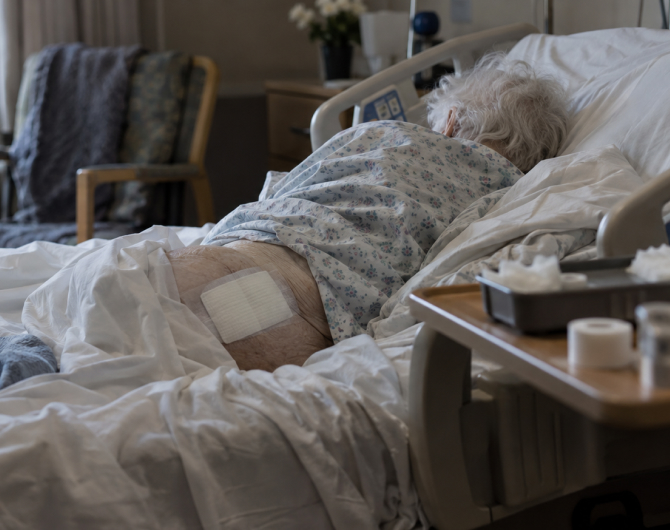
What Is a Stage 4 Bedsore?
Stage 4 bedsores are the deepest and most serious pressure injuries. Unlike stage 3 bedsores, which stay within the fatty tissue, stage 4 wounds extend into deeper structures like the bones and joints.
Other characteristics of a stage 4 pressure ulcer may include:
- A deep, crater-like open wound
- Eschar (dead tissue) that’s dry, black, and thick
- Drainage or other signs of infection
- Exposed fatty tissue
- Slough (dead tissue that’s damp, squishy, and yellow)
- Tunneling beneath the surrounding tissue
These bedsores may develop over bony areas that suffer long-term pressure. If nursing home residents with mobility problems aren’t repositioned by staff, they can develop pressure ulcers on their heels, hips, tailbone, ankles, and shoulder blades. No one deserves the neglect that can lead to a stage 4 pressure wound.
Reach out now for a free, no-obligation case review if this happened to your family.
What Causes Stage 4 Bedsores in Nursing Homes?
A bedsore may reach stage 4 when a person’s blood flow is cut off due to constant pressure. By stage 4, a bedsore has gone untreated for a significant period of time, causing a deep wound and necrotic (blackened and dying) skin.
These factors can cause stage 4 pressure ulcers:
- Limited mobility: Residents who cannot change position without help, including those who are bedridden or wheelchair-bound, face the highest risk
- Progression from an earlier wound: A stage 4 bedsore may develop when an earlier pressure injury continues to worsen without proper care
- Underlying health conditions: Dementia, diabetes, incontinence, dehydration, and poor nutrition can increase a resident’s risk or make healing more difficult
- Understaffing: Fewer nursing home employees can mean residents don’t get repositioned or receive skin checks that prevent pressure injuries from worsening
Regular repositioning is essential in preventing a bedsore from getting worse. For example, a bedridden resident with a stage 4 pressure wound on their foot or back may not have developed the injury if staff had relieved the pressure as they were trained to do.
Nursing home abuse can also make bedsores worse. Neglected residents may not get clean bedding, good hygiene, and a well-rounded diet that minimizes the risk of skin breakdown or moisture buildup.
Is a Stage 4 Bedsore Evidence of Nursing Home Neglect?
Nursing home neglect isn’t always the cause of a resident’s severe bedsore. Some residents have complex medical conditions like diabetes, which make preventing or treating pressure injuries difficult.
However, serious questions arise when a bedsore reaches stage 4. Families often assume that a facility is taking good care of their loved ones. They may not realize neglect is happening until a wound requires immediate medical care.
Here’s how you can tell if neglect contributed to a stage 4 pressure injury:
- A resident has repeatedly been left in wet or soiled clothing
- An earlier bedsore worsened without appropriate intervention
- Employees didn’t tell family members about a worsening wound
- Poor nutrition or dehydration hasn’t been addressed
- Signs of infection have gone untreated
- Staff failed to provide needed repositioning
- Understaffing contributed to missed or delayed care
- Wound care or medical treatment has been inadequate
If your loved one has experienced a pressure ulcer at stage 4, ask to speak to the facility’s administrators. You should know when the bedsore was discovered and what was done at each stage to treat it.
When nursing home staff can’t explain or have conflicting answers, neglect may have caused the pressure ulcer.
Complications of Stage 4 Pressure Ulcers
Because stage 4 bedsores reach so deep into the body, they have the highest risk of serious complications of any bedsore stage. The wounds can easily become infected, which may lead to death.
Complications of a stage 4 pressure injury may include:
- Cellulitis: An infection of soft tissue damage that may cause warmth, swelling, and discoloration
- Infections: Bacteria from the wound can enter the bloodstream, leading to different types of infections
- Osteomyelitis: A bone infection that can develop when infection from the wound spreads into nearby bone
- Sepsis: A life-threatening complication that might occur when an infection triggers a dangerous, body-wide response
A stage 4 pressure wound that isn’t managed properly can quickly become life-threatening. Prompt medical attention and consistent wound care are essential to preventing these complications.
How Are Stage 4 Bedsores Treated?
Stage 4 bedsore treatment requires medical attention and careful wound care. Because the damage extends so deeply, treatment may involve surgery and an extensive recovery period.
Stage 4 pressure ulcer treatments can include:
- Antibiotics to treat a bacterial infection
- Cleaning and dressing the wound
- Debridement to remove dead tissue
- Nutritional and hydration support
- Regular repositioning and other measures to relieve pressure
- Specialized mattresses or other support surfaces
- Surgical reconstruction or skin grafts for severe wounds
- Other treatments for underlying health conditions
Some residents may need surgical reconstruction or grafting depending on the wound and the patient’s overall health. A doctor’s recommendation may vary based on the wound’s condition, the resident’s medical history, and how well their body might respond to treatment.
What to Do if Your Loved One Has a Stage 4 Bedsore
Get your loved one medical care immediately if they have a serious bedsore. Afterward, find out who was overseeing their daily care. Staff should be able to tell you when they first documented the wound and what treatment was given before it progressed to stage 4.
Save notes on everything you observe and what you’re told. Photos and written records can strengthen your claim if you decide to report the facility or get stage 4 bedsore legal help.
Questions are worth asking to get a clear picture of why the wound progressed through the 4 stages of bedsores.
When neglect causes a severe pressure wound, you may have legal options. Compensation could be available through a stage 4 pressure ulcer lawsuit, which may cover medical expenses, pain and suffering, and other expenses related to what your loved one has endured.
What Is a Stage 4 Bedsore Lawsuit?
A stage 4 pressure sore lawsuit allows your family to hold a facility accountable for nursing home injuries like these. Through a legal claim, attorneys will fight for a fair payout on your behalf through the civil court system.
Stage 4 bedsore lawsuit compensation may help your family pay for:
- Funeral costs
- Medical expenses
- Moving your loved one to a new facility
- Pain and suffering
- Other harm caused by the neglect
“In many cases, families can sue a nursing home if a resident is harmed due to preventable conditions like stage 4 bedsores or untreated infections. These are often signs of severe neglect, especially when staff members fail to notice or address them in a timely manner.”
— Ricky LeBlanc, managing attorney at Sokolove Law
You don’t have to collect evidence of neglect before reaching out. We’ll listen to your experience and connect you with a stage 4 bedsore attorney in our network if you qualify for a lawsuit.
How Long Do You Have to File a Stage 4 Bedsore Lawsuit?
You only have a limited time to file a stage 4 nursing home bedsore lawsuit. Filing deadlines, which are also called statutes of limitations, differ by state.
States typically give people 2 to 3 years to file nursing home neglect claims, but some laws have 1-year deadlines based on case-specific factors.
You may not be able to seek compensation if you want to file a nursing home neglect lawsuit after your state’s deadline has passed.
Don’t miss your chance: Our team is standing by to answer questions and provide clarity on your options. We have partner nursing home bedsore lawyers who understand the statutes in each state and can help you file if eligible.
Stage 4 Bedsore Lawsuit Settlement Amounts
Nursing home abuse and neglect law firms help people by negotiating settlements or fighting for fair court verdicts. The average stage 4 bedsore settlement is $400,000, but some families get much more depending on the case.
Here are some notable stage 4 bedsore verdicts and settlements:
- $30.9 million awarded to family members in California whose loved one died of a severe bedsore as a result of the facility being understaffed.
- $7.6 million obtained by a family in Virginia. Their loved one passed away from sepsis related to a stage 4 hip ulcer.
- $2.3 million secured by a Florida family after their loved one died of a stage 4 pressure ulcer.
- $1.4 million awarded to a Virginia family whose loved one died after developing a bone-deep stage 4 bedsore that required several surgical debridements.
- $1.5 million secured by a Maryland family. Their loved one developed a serious bedsore and died of a bone infection.
- $4 million obtained by a family in North Carolina after their loved one died of multiple stage 4 pressure wounds.
- $30 million awarded to a Tennessee family whose loved one died 2 months after a leg amputation that was a result of a stage 4 pressure ulcer.
If your loved one has experienced a stage 4 bedsore, one of our partner lawyers may be able to help you secure compensation. Most cases settle outside of court, but our attorneys can also represent you in a trial if needed.
It costs nothing to speak with our team about your eligibility. Contact us now to get support.
How to File a Stage 4 Bedsore Lawsuit
Starting a lawsuit can seem like a lot, particularly while you’re still managing your loved one’s care. Breaking it down into clear steps can help you understand what lies ahead as you seek accountability for stage 4 pressure ulcers.
The nursing home lawyers in our network make the process of filing a lawsuit much simpler, taking on the bulk of the work for you. This way, you can pursue justice for a stage 4 bedsore with less hassle.
Follow these steps to start a stage 4 pressure ulcer lawsuit:
- Get a free case review: Speak with our team to see whether you can file a claim.
- Gather documentation: Your bedsore lawyer will pull together staff notes, medical records, stage 4 bedsore photos, and other evidence to build a strong case.
- File your stage 4 bedsore lawsuit: Your attorney will draft and file your bedsore lawsuit with the appropriate court before your state filing deadline passes.
- Get compensated: Your bedsore attorney will manage the legal process, including negotiations with the nursing home or its insurer. Many cases award compensation through settlement rather than trial. However, your lawyer can represent you in court if a settlement can’t be reached.
Stage 4 pressure ulcers can change a family forever. You deserve answers for what happened to your loved one, so reach out to our team today.
Start now by getting your free case review.
Get Legal Support After Stage 4 Bedsores
Your loved one’s safety should have been guaranteed. If you’re searching for answers about what caused their stage 4 bedsore, we’re here to help you find them.
A nursing home bedsores lawsuit can help you or your loved one pursue accountability after neglect. A settlement or court verdict could make it easier to cover medical costs, relocation, funeral expenses, and other related expenses.
Get a free case review or call (877) 640-6101 to talk with us about how much your claim may be worth.
Stage 4 Bedsore FAQs
How serious is a stage 4 bedsore?
A stage 4 pressure ulcer may expose tendons and bone, making it the most severe stage of a bedsore. It may also have tunneling, dead tissue, or drainage.
These wounds require immediate medical treatment and can cause serious complications, particularly if an infection develops. Because the damage reaches so deep into the body, these bedsores carry a high risk of infections like sepsis.
No one should have to experience such a severe wound. If you have questions about your loved one’s care, contact us now to get support.
What does a stage 4 bedsore look like?
A stage 4 bedsore is a deep, open wound where the skin and underlying tissue have broken down to expose muscle, tendon, or bone. The wound may have dead tissue that looks yellow, tan, brown, or black, and the sore may tunnel into the surrounding skin.
If you’re unsure about your loved one’s wound, pictures of stage 4 bedsores and a medical provider’s opinion can help you get clarity and understand next steps.
What is the difference between a stage 3 and 4 pressure ulcer?
Depth is the main difference between a stage 3 and 4 pressure ulcer. While stage 3 bedsores can expose fatty tissue, stage 4 pressure wounds can expose bone and ligaments.
Bacteria can more easily enter the bloodstream through deep wounds. Stage 4 pressure ulcers have a higher risk of infection and premature death, making them the most severe bedsore stage.
How do you treat a stage 4 pressure ulcer?
Treatment for a stage 4 bedsore typically involves debridement to remove dead tissue, basic wound care to reduce infection risk, and bandages that support healing. Relieving pressure on the area is also essential.
Many stage 4 wounds require more advanced care, including surgery. Proper nutrition, especially adequate protein intake, also plays a key role in supporting the body’s ability to heal.
While the costs of stage 4 bedsores can be expensive, your family could more easily afford them through legal claims. Some stage 4 bedsore million-dollar cases have changed families’ lives.
Call us at (877) 640-6101 if you’re interested in taking legal action and pursuing stage 4 bedsore payouts.
How long does it take for a bedsore to get to stage 4?
There’s no fixed timeline for bedsores to worsen from stage 1 to 4. Progression depends on a resident’s overall health, nutrition, the location and amount of pressure involved, and any underlying medical conditions.
Adult Protective Services estimates how long it takes bedsores to form:
- Stage 1: Within hours
- Stage 2: Hours to days
- Stage 3: Days to weeks
- Stage 4: Weeks to months
Many nursing home residents with stage 4 bedsores have received potentially inadequate care for a long time. As a result, they and their families often qualify to pursue nursing home neglect lawsuits and get justice.
What is the life expectancy for someone with a stage 4 pressure ulcer?
There is no specific stage 4 bedsore life expectancy. A person’s outlook depends on their overall health, the severity of the wound, infection, nutrition, other medical conditions, and response to treatment.
Stage 4 pressure ulcers can cause life-threatening complications, but the wound alone cannot predict how long someone will live. Getting a resident medical care immediately is the best way to improve their chance at an easier recovery and living longer.
Can a stage 4 bedsore be healed?
Healing is possible, but these bedsores are the most difficult stage to treat and often take months to close, even with aggressive wound care. Many patients also need surgical intervention to remove dead tissue and apply skin grafts.
Accessing medical care and relocating your loved one may be easier with a nursing home neglect settlement. Contact us to discuss your questions about moving forward with a stage 4 bedsore lawsuit.
Can a stage 4 bedsore cause sepsis?
Yes, deep wounds can easily become infected and introduce bacteria into a person’s bloodstream. That’s why stage 4 bedsores and sepsis are often diagnosed together.
Sepsis is a potentially life-threatening response to infection and requires immediate medical attention. If a nursing home resident with this kind of bedsore develops signs of sepsis, like fever, confusion, rapid breathing, or a rapid heart rate, dial 911 right away.
Can you sue a nursing home for stage 4 bedsores?
Yes, you may be able to file a stage 4 bedsore lawsuit if nursing home neglect caused the wound or allowed an earlier pressure injury to worsen. A lawyer can investigate what happened and determine whether compensation may be available for your loved one.
Get a stage 4 bedsore legal consult to find out if you have a strong claim. Our team can listen to your experience and connect you with one of our partner nursing home abuse lawyers if you qualify.
How much compensation can you receive in a stage 4 bedsore lawsuit?
Stage 4 bedsore lawsuit settlements and verdicts vary, but the average claim is worth around $400,000. If you’re eligible, your lawyer will negotiate a meaningful settlement based on the evidence they present.
Get your free case review now to speak with us about your loved one’s pressure ulcer. You may be able to seek compensation and accountability for their stage 4 bedsore.

Written by: Her Case Matters
At HerCaseMatters, we believe women deserve to be heard — especially when it comes to their health and safety. Too often, harmful drugs, devices, and corporate wrongdoing impact women’s lives without proper warning, support, or accountability. We’re here to change that. We work with trusted legal partners who are deeply experienced in holding powerful companies accountable. But more than that, we’re here to remind women everywhere that their pain is real, their experiences matter, and they deserve justice.
- Advantage Surgical & Wound Care. (n.d.). Wound care essentials: Quick reference nursing guides. Retrieved from: https://www.advantagewoundcare.org/detail/what-is-a-stage-iv-pressure-injury.
- Cision PR Web. (January 27, 2023). Jury returns $30.9 million verdict against Plum Healthcare and its skilled nursing facility in Northern California. Retrieved from: https://www.prweb.com/releases/jury-returns-30-9-million-verdict-against-plum-healthcare-and-its-skilled-nursing-facility-in-northern-california-839660545.html.
- Cleveland Clinic. (February 24, 2023). Bedsores (pressure injuries). Retrieved from: https://my.clevelandclinic.org/health/diseases/17823-bedsores-pressure-injuries.
- HealthPartners. (n.d.). Diabetic wounds that won’t heal? Learn why you’re healing slowly and how to speed up the process. (Retrieved from: https://www.healthpartners.com/blog/why-diabetic-wounds-wont-heal-and-tips-to-treat-them/.
- Illinois Department of Aging. (n.d.). Medical issues in abuse/neglect Cases: Pressure ulcers. Retrieved from: https://ilaging.illinois.gov/content/dam/soi/en/web/aging/protectionadvocacy/aps-toolkit/medical-issues-pressure-ulcers-presentation.pdf.
- Law360. (August 11, 2023). Nursing home owes $2.3m over bedsore death, jury finds. Retrieved from: https://www.law360.com/articles/1710406/nursing-home-owes-2-3m-over-bedsore-death-jury-finds.
- Mayo Clinic. (February 22, 2024). Bedsores (pressure ulcers). Retrieved from: https://www.mayoclinic.org/diseases-conditions/bed-sores/symptoms-causes/syc-20355893.
- McKnights Long-Term Care News. (n.d.). SNF will challenge jury’s $30 million negligence verdict. Retrieved from: https://www.mcknights.com/news/snf-will-challenge-jurys-30-million-negligence-verdict/.
- Mondragon, N., & Zito, P. M. (February 28, 2024). Pressure injuries. Retrieved from: https://www.ncbi.nlm.nih.gov/books/NBK557868/.
- National Pressure Injury Advisory Panel. (n.d.). Pressure injury and stages. Retrieved from: https://www.vumc.org/pip/sites/default/files/NPIAP-Staging-Poster.pdf.
- North Carolina Lawyers Weekly. (December 6, 2025). $4 million settlement; improper care allegedly leads to nursing home death. Retrieved from: https://nclawyersweekly.com/2025/12/06/4-million-settlement-improper-care-allegedly-leads-to-nursing-home-death/.
- Sepsis Alliance. (July 17, 2026). Sepsis and pressure ulcers (pressure injuries). Retrieved from: https://www.sepsis.org/sepsisand/pressure-ulcers-pressure-injuries/.
- Shrateh, O. N., Jobran, A. W. M., Adwan, R., et al. (April 2023). Successful management of extensive stage four sacral pressure ulcer in a paraplegic patient. Retrieved from: https://www.ovid.com/jnls/ijscr/fulltext/10.1016/j.ijscr.2023.107990~successful-management-of-extensive-stage-four-sacral.
- Sokolove Law. (September 25, 2026). Stage 4 bedsores in nursing homes. Retrieved from: https://www.sokolovelaw.com/nursing-home-abuse/neglect/stage-4-bedsores/.
- The Daily Record. (February 20, 2024). Baltimore jury awards $1.5M in nursing home bed sore case. Retrieved from: https://thedailyrecord.com/2024/02/20/baltimore-jury-awards-1-5-million-in-nursing-home-bed-sore-case/.
- Virginia Lawyers Weekly. (August 20, 2024). Patient died after developing stage IV pressure ulcer — $7,624,000 verdict. Retrieved from: https://valawyersweekly.com/2024/08/20/patient-died-after-developing-stage-iv-pressure-ulcer-7624000-verdict/.
- Virginia Lawyers Weekly. (December 5, 2022). Woman died months after pressure sore infections — $1.4M verdict. Retrieved from: https://valawyersweekly.com/2022/12/05/woman-died-months-after-pressure-sore-infections-1400000-verdict/.